Japan · Japan
Two Weeks in Japan
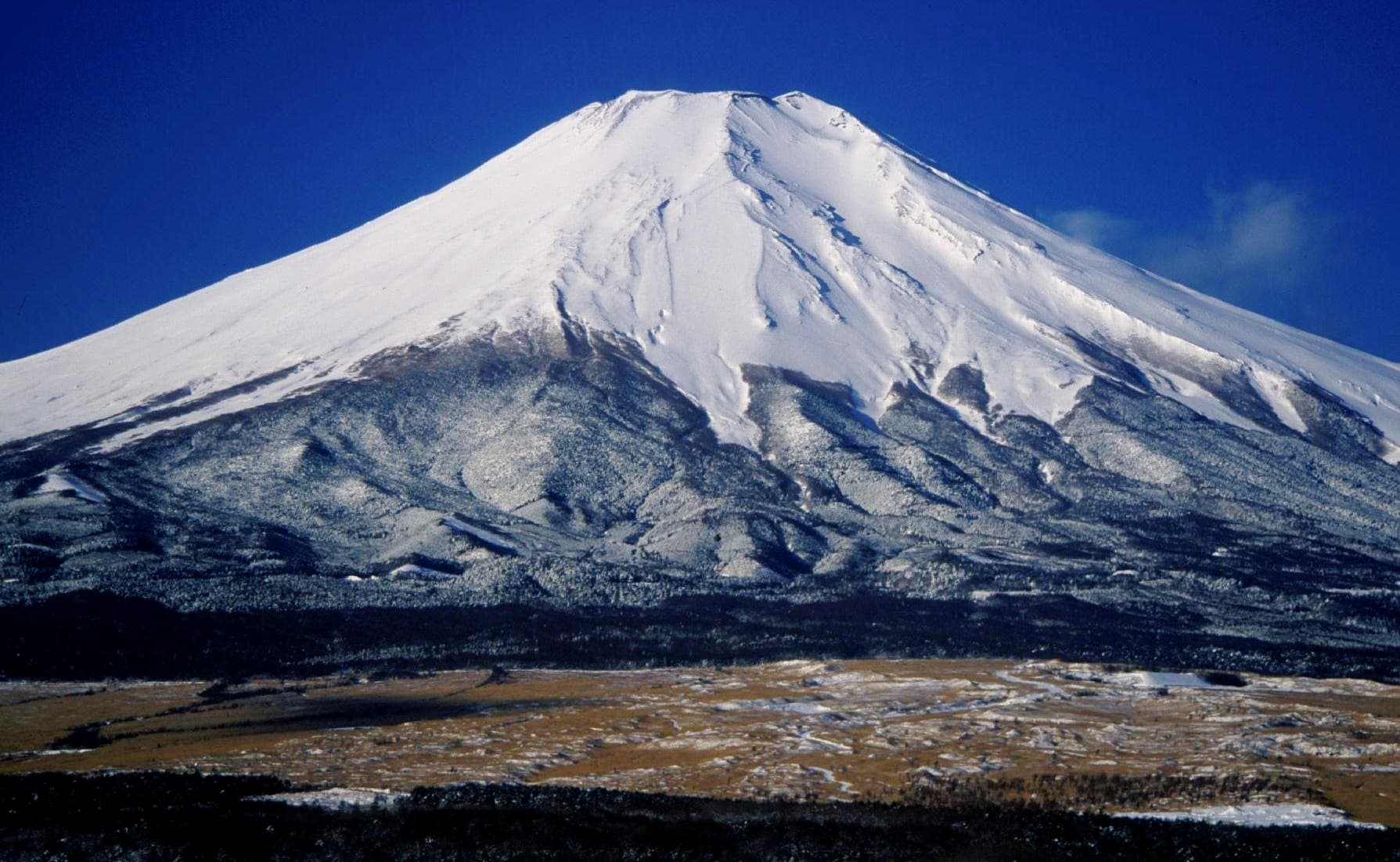
Base 3 to 4 nights in Tokyo, 1 to 2 in Hakone for the onsen and Mount Fuji views, 2 to 3 in Kyoto, then 1 to 2 in Osaka, with Nara, Himeji and Hiroshima/Miyajima as day trips from the Kansai leg.
 Alpsdake / CC0 via Wikimedia Commons
Overview
Japan rewards a route more than a single base. Two weeks is enough to move from Tokyo’s scale and speed, through the volcanic calm of Hakone, into Kyoto’s temples and Nara’s deer, and out through Osaka’s food streets, without feeling rushed at any one stop.
If you only take one thing from this guide: buy your intercity train tickets (or a rail pass) before you need them and reserve seats on the shinkansen legs you care about. The trains are reliable; your ability to walk up and get a seat in peak season is not.
Best for
First-time Japan visitors · Culture plus food · Couples · Rail travelers · Photographers
Daily itinerary
12 to 16 days
Unlike a single-city trip, this route uses Japan’s rail network as the spine: the shinkansen and local trains are frequent and precise enough that a multi-city itinerary is genuinely relaxing rather than a logistics project.
Best time to visit
Late March to early May (cherry blossoms) and October to November (autumn color) are the most beautiful and the most crowded. Early summer (June) and winter (December to February, outside New Year) are calmer and still comfortable for this route.
- March to April: Cherry blossom season in Tokyo and Kyoto; book hotels months ahead.
- May to June: Comfortable, greener, thinner crowds; late June brings the rainy season.
- July to August: Hot and humid; good for festivals, harder for long walking days.
- September to October: Typhoon risk early, then clear autumn weather sets in.
- November: Peak autumn foliage in Kyoto; the second most crowded window of the year.
Things worth knowing
- Cherry blossom season (sakura), typically late March to early April in Tokyo and Kyoto, dates shift yearly.
- Gion Matsuri in Kyoto through July, the city’s best-known festival month.
Where to stay
Shinjuku, Tokyo
A high-rise hub with the busiest train station in the world at its center, excellent hotels at every price point, and Kabukicho’s neon a short walk from quiet Shinjuku Gyoen park.
Best for: First-time visitors · Nightlife · Transit access
The station itself is a maze; allow extra time for the first few transfers.
Asakusa, Tokyo
Old downtown Tokyo around Senso-ji temple: lower buildings, traditional shops on Nakamise-dori, and a slower pace than the western side of the city.
Best for: Culture · Traditional atmosphere · Walking
Very crowded around the temple gate by mid-morning; go early.
Hakone-Yumoto, Hakone
The gateway onsen town for the Hakone loop: hot-spring ryokans, easy access to the Tozan railway, and views toward Mount Fuji on clear days.
Best for: Onsen · Nature · Couples
Mount Fuji is only visible on clear days; cloud cover is common, especially in summer.
Gion and Higashiyama, Kyoto
Kyoto’s best-preserved old quarter: wooden machiya houses, the Kiyomizu-dera approach streets, and the geiko and maiko district around Hanamikoji.
Best for: Culture · Photography · Traditional dining
Photographing maiko or entering private lanes off Hanamikoji is restricted and fined; keep to public streets.
Namba and Dotonbori, Osaka
Osaka’s food and neon core: the canal-side Dotonbori strip, Shinsaibashi shopping, and some of the best casual eating in the country.
Best for: Food · Nightlife · Budget travelers
Extremely busy on weekend evenings; the canal-side photo spots get packed.
Where to sleep
Park Hyatt Tokyo
luxury · Shinjuku, Tokyo
Best for: Couples · Skyline views · A special stay
- Occupies the top floors of a Shinjuku tower with 360-degree views
- Widely known from film and design press
- Excellent restaurants and the New York Bar
- Expensive
- A taxi or a longer walk from Shinjuku Station than cheaper hotels
- Small pool for the price point
Hotel Gracery Shinjuku
value · Kabukicho, Shinjuku, Tokyo
Best for: First-time visitors · Central location · Value for a Tokyo base
- A five-minute walk from Shinjuku Station’s east exit
- The Godzilla Head terrace is a genuine landmark
- Reliable mid-range chain comfort
- Kabukicho at night is loud outside the hotel
- Rooms are compact by Western standards
- Breakfast queue can be long
Gora Kadan
luxury · Gora, Hakone
Best for: Couples · Onsen · A ryokan splurge
- Built on the grounds of a former Imperial family villa
- Private and shared hot-spring baths fed by natural sources
- Kaiseki dinner served in-room
- Expensive relative to Hakone’s midrange ryokans
- Formal kaiseki dinner timing is fixed, not flexible
- Books out early in cherry blossom and autumn seasons
Hoshinoya Kyoto
luxury · Arashiyama, Kyoto
Best for: Couples · A riverside retreat · Design lovers
- Reached by a short boat ride up the Oi River
- A former 17th-century riverside villa reworked as an inn
- On-site kaiseki dining and a genuinely quiet setting
- Boat-only arrival means less flexibility with luggage and timing
- Far from central Kyoto’s Gion and Higashiyama sights
- Premium pricing for a relatively small room count
Conrad Osaka
luxury · Nakanoshima, Osaka
Best for: Skyline views · Couples · Comfort after a Kansai day-trip loop
- Occupies floors 33 to 40 of a Nakanoshima tower with river and city views
- Floor-to-ceiling windows in every room
- Well placed between Osaka’s two main stations
- A taxi or several train changes from Dotonbori’s food streets
- Business-district area is quiet at night
- Premium pricing for the room size
Essential experiences
Senso-ji
Tokyo’s oldest and most visited temple, entered through the giant red Kaminarimon lantern gate and the Nakamise-dori shopping street.
Shibuya Crossing
The famous scramble crossing outside Shibuya Station, best seen once at street level and once from a cafe or observation deck above.
Meiji Jingu
A forested Shinto shrine dedicated to Emperor Meiji and Empress Shoken, a short walk from Harajuku through a dense inner-city forest.
Owakudani and Lake Ashi, Hakone
A volcanic valley reached by ropeway, known for its sulfur vents and black eggs, followed by a cruise on Lake Ashi toward the Hakone Shrine torii.
Fushimi Inari Taisha
Thousands of vermilion torii gates climbing Mount Inari, Kyoto’s most photographed shrine and free to visit at any hour.
Kiyomizu-dera
A wooden temple built without nails on a hillside stage overlooking Kyoto, part of the Historic Monuments of Ancient Kyoto UNESCO listing.
Arashiyama Bamboo Grove
A dense bamboo path on Kyoto’s western edge, best walked early morning before the tour groups arrive, near the Togetsukyo Bridge.
Osaka Castle
A rebuilt keep on the site of the original 16th-century castle, set in a large park with a museum inside and cherry trees around the moat.
Dotonbori
Osaka’s neon canal-side food and entertainment strip, home to the giant Glico running-man sign and some of the city’s best street food.
Food & drink
- Sushi: Best value and freshness near the fish markets: Tsukiji Outer Market in Tokyo or the counters around Kuromon Ichiba in Osaka.
- Ramen: Regional styles vary widely; tonkotsu (pork bone broth) chains like Ichiran are a reliable, no-frills introduction.
- Takoyaki: Octopus batter balls, Osaka’s signature street food, sold hot from stalls throughout Dotonbori.
- Kaiseki: A multi-course seasonal meal, the centerpiece of a ryokan stay in Hakone or Kyoto.
- Yudofu: Simmered tofu, a Kyoto Buddhist-temple specialty, especially around Arashiyama and Nanzen-ji.
Slurping noodles is normal and not rude; tipping is not expected anywhere in Japan and can cause confusion if left on a table.
Where to eat
Tsukiji Outer Market
marketThe retail and food-stall market that remains after the wholesale auction moved to Toyosu; arrive early for the shortest lines.
Last researched 2026-07-15
Ichiran Ramen
casualA tonkotsu ramen chain with individual ordering booths; consistent quality across every city on this route.
Last researched 2026-07-15
Nishiki Market
marketA roughly 400-meter covered market street of small food stalls, known locally as "Kyoto’s kitchen."
Last researched 2026-07-15
Sunrises
Tsukiji Outer Market at opening
Arriving as the market opens gives clean light on the stalls and the shortest lines for the freshest sushi breakfast in Tokyo.
Year-round
Lake Ashi, Hakone
Early morning on the lake, before the tour boats start, can catch still water and, on clear days, Mount Fuji reflected beyond the torii.
Autumn and winter for the clearest Fuji views
Sunsets
Shibuya Sky observation deck
An open-air rooftop deck above Shibuya Crossing, with a 360-degree view over the city as the neon comes on below.
Year-round
Lake Ashi torii and Mount Fuji, Hakone
The floating torii gate of Hakone Shrine with Mount Fuji behind it on clear evenings, one of the most photographed views in the region.
Autumn and winter, clearest air · Fuji is frequently obscured by cloud, especially in summer; treat a clear view as a bonus, not a guarantee.
Kiyomizu-dera stage, Kyoto
The wooden veranda of Kiyomizu-dera looking over the wooded hillside and city beyond, especially striking during illuminated evening openings.
Spring and autumn illumination periods · Evening illumination hours are seasonal and limited; confirm current dates before planning around it.
Day trips
Nara Park and Todai-ji
Free-roaming, bowing deer around a park that also holds Todai-ji, home to one of Japan’s largest bronze Buddha statues.
About 45 minutes by train from Kyoto · Half to full day
Himeji Castle
Japan’s best-preserved original castle keep, a UNESCO World Heritage Site known as the "White Heron Castle" for its plastered white walls.
About 1 hour by shinkansen from Kyoto or Osaka · Half day
Hiroshima and Miyajima
A longer day trip combining the Hiroshima Peace Memorial Park with the floating torii of Itsukushima Shrine on Miyajima island.
About 1.5 to 2 hours by shinkansen from Kyoto or Osaka, plus a ferry to Miyajima · Full day
Daily itinerary
A seven-day core route: Tokyo, Hakone, Kyoto and Osaka
The spine of a longer trip. Extend to two full weeks by adding a Hiroshima/Miyajima overnight and an extra Tokyo or Kyoto day.
- 1
Arrive in Tokyo, Asakusa
relaxedArrive, settle in, rest from the flight.Noodles near your hotel.Senso-ji and Nakamise-dori in Asakusa, ideally before mid-morning crowds.Casual izakaya dinner in Shinjuku.Short walk through Omoide Yokocho.Airport to Tokyo by train or airport limousine bus; no car needed in the city.Estimate: If jet-lagged, push Senso-ji to day 2 and rest instead.
- 2
Shibuya, Harajuku and Meiji Jingu
moderateMeiji Jingu’s forested grounds, then Takeshita-dori in Harajuku.Casual lunch in Harajuku.Shibuya Crossing and the surrounding shops.Shibuya Sky observation deck.Dinner in Shibuya or back in Shinjuku.Free evening.All reachable on the Yamanote line loop.Estimate: Swap Shibuya Sky for a quieter rooftop bar if it is sold out.
- 3
Move to Hakone
moderateTrain to Hakone-Yumoto via Odawara.Soba near Hakone-Yumoto Station.Hakone Ropeway to Owakudani, then the Lake Ashi cruise.Lake Ashi torii, Fuji permitting.Kaiseki dinner at your ryokan.Onsen soak.Odakyu Romancecar from Shinjuku, then the Hakone loop pass covers ropeway, cable car and cruise.Estimate: If Fuji is clouded over, add the Hakone Open-Air Museum instead.
- 4
Move to Kyoto, Fushimi Inari
moderateTrain from Odawara to Kyoto via Shin-Odawara or Odawara shinkansen.Arrive and lunch near Kyoto Station.Fushimi Inari Taisha; walk as far up the mountain as you like.Yasaka Pagoda street in Higashiyama.Kyoto specialties near Gion.Quiet lantern-lit walk through Gion.Shinkansen from Odawara to Kyoto; trains and buses cover the rest.Estimate: Save Fushimi Inari for an early morning day 5 start if you arrive late.
- 5
Higashiyama and Arashiyama
fullKiyomizu-dera and the Higashiyama temple lanes.Casual lunch in Higashiyama.Cross town to Arashiyama for the Bamboo Grove and Togetsukyo Bridge.Yudofu or kaiseki dinner in Arashiyama or back in central Kyoto.Free evening.Bus or taxi between Higashiyama and Arashiyama; both areas are walkable once there.Estimate: Swap Arashiyama’s afternoon for Nishiki Market if bamboo-grove crowds are heavy.
- 6
Nara day trip, then move to Osaka
fullTrain to Nara; Nara Park and the deer.Lunch in Nara near Todai-ji.Todai-ji’s Great Buddha Hall and Kasuga-taisha, then train onward to Osaka.Dotonbori street food crawl.Dotonbori at night, canal-side.Train from Kyoto to Nara, then Nara to Osaka; leave bags at a Kyoto locker or forward them ahead.Estimate: Swap Nara for Himeji Castle if a rebuilt keep interests you more than deer and temples.
- 7
Osaka Castle and departure
relaxedOsaka Castle park and museum.Last Osaka meal near the castle or Namba.Last-minute shopping in Shinsaibashi.Departure via Kansai International Airport.Leave buffer time for the airport limousine bus or train from central Osaka.Estimate: If flying from Tokyo instead, take the shinkansen back the evening before.
Getting around
- Narita (NRT) and Haneda (HND) are Tokyo’s two international airports; Haneda is closer to central Tokyo.
- Kansai International Airport (KIX) serves Osaka and the Kyoto/Kansai region.
- The shinkansen (bullet train) connects Tokyo, Odawara (for Hakone), Kyoto and Osaka in under 3 hours combined; a Japan Rail Pass can be worthwhile for this exact route.
- IC cards (Suica/Pasmo/ICOCA) cover subways, city buses and most local trains across all four stops.
- Hakone uses a dedicated loop pass covering its railway, ropeway, cable car and lake cruise.
Things worth knowing
- · Not reserving shinkansen seats in cherry blossom or autumn foliage season.
- · Underestimating how much time Shinjuku or Tokyo Station transfers take.
- · Skipping the Hakone loop pass and paying for the ropeway, cruise and cable car separately.
Budget
| Low | Expected | Comfortable | |
|---|---|---|---|
| Accommodation style / per night | ¥8,000 | ¥25,000 | ¥70,000 |
| Food style / per day | ¥3,000 | ¥8,000 | ¥20,000 |
| Local transport / per day | ¥1,200 | ¥3,500 | ¥9,000 |
| Estimate / per day | ¥500 | ¥2,500 | ¥7,000 |
Estimate · JPY · 2026-07-15. Accommodation is per room per night (two sharing). Intercity shinkansen fares (Tokyo to Kyoto/Osaka is roughly 14,000 yen one-way) are on top of the daily local transport figure above; a rail pass can bundle this if it covers enough legs.
Things worth knowing
Frequently asked questions
How many days do you need for Tokyo, Hakone, Kyoto and Osaka?
Twelve to sixteen days is comfortable: about 3 to 4 in Tokyo, 1 to 2 in Hakone, 2 to 3 in Kyoto, and 1 to 2 in Osaka, with day trips woven in from the Kansai leg.
Is a Japan Rail Pass worth it for this route?
Often yes for this exact spine, since it covers the Tokyo to Odawara, Odawara to Kyoto and Kyoto to Osaka shinkansen legs plus day trips like Himeji or Hiroshima; compare the pass price against buying individual tickets for your specific dates.
Do you need to speak Japanese to travel this route?
No. Major stations, trains and most restaurants in these cities have English signage and increasingly English-speaking staff, though a translation app helps in smaller towns like parts of Hakone.
When is the best time to do this itinerary?
Late March to early April for cherry blossoms or October to November for autumn color are the most beautiful, but also the most crowded and expensive; June and early December are calmer alternatives.
Can you see Mount Fuji from Hakone?
On clear days, yes, especially from the Lake Ashi cruise and the Owakudani ropeway; cloud cover is common though, so treat a clear view as a bonus rather than a guarantee.
Sources (4)
- Historic Monuments of Ancient Kyoto is a UNESCO World Heritage site · unesco · 2026-07-15
- Himeji-jo (Himeji Castle) is a UNESCO World Heritage site · unesco · 2026-07-15
- Getting around Japan by rail, including shinkansen and IC cards · tourism-board · 2026-07-15
- Senso-ji, Shibuya Crossing and Meiji Jingu, Tokyo attractions · tourism-board · 2026-07-15