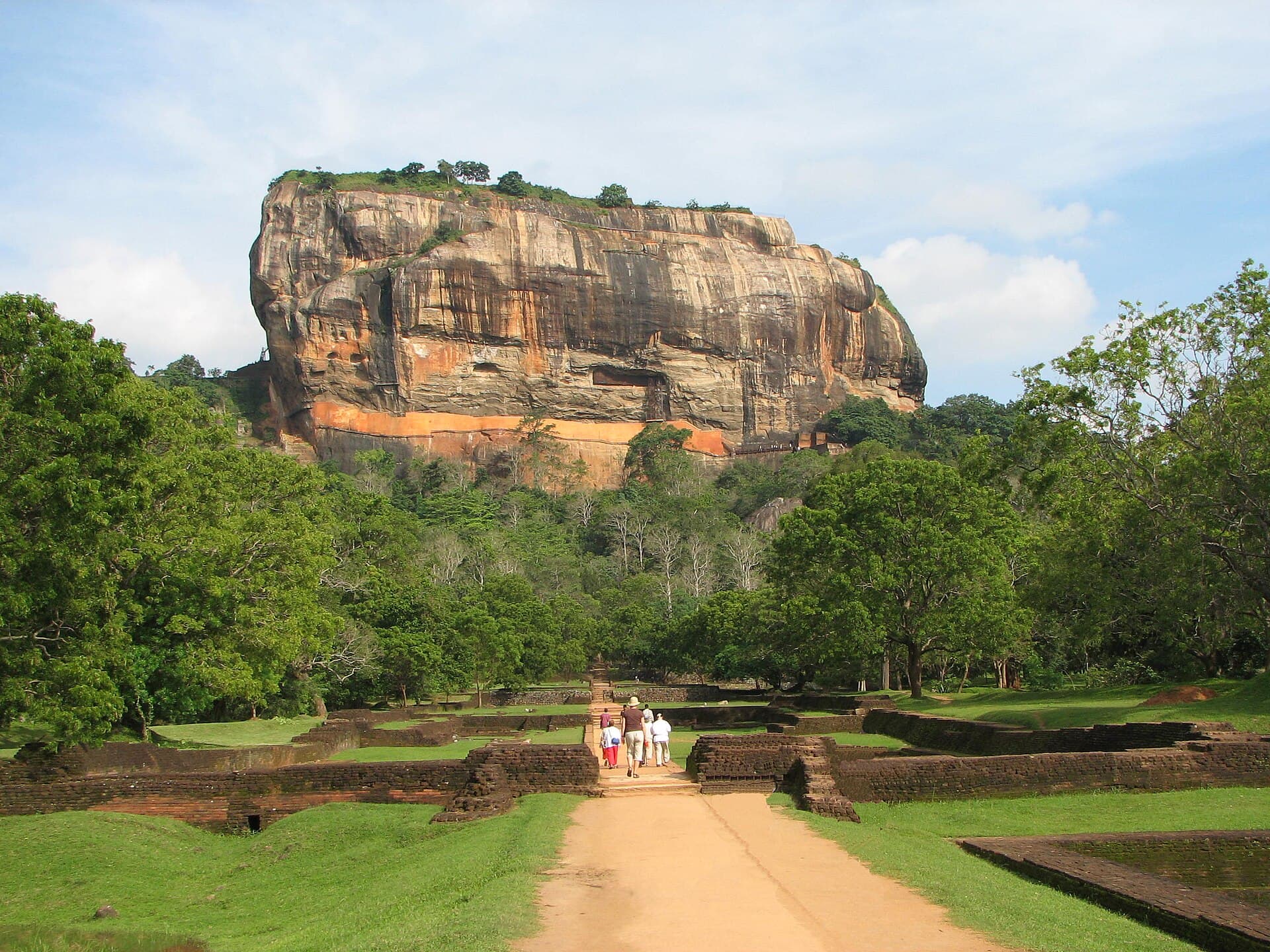
India · Rajasthan
Rajasthan Golden Triangle
Base a day or two in each of Delhi, Agra and Jaipur, then, if you have the days, push on to Udaipur or Jodhpur where the real soul of Rajasthan lives.
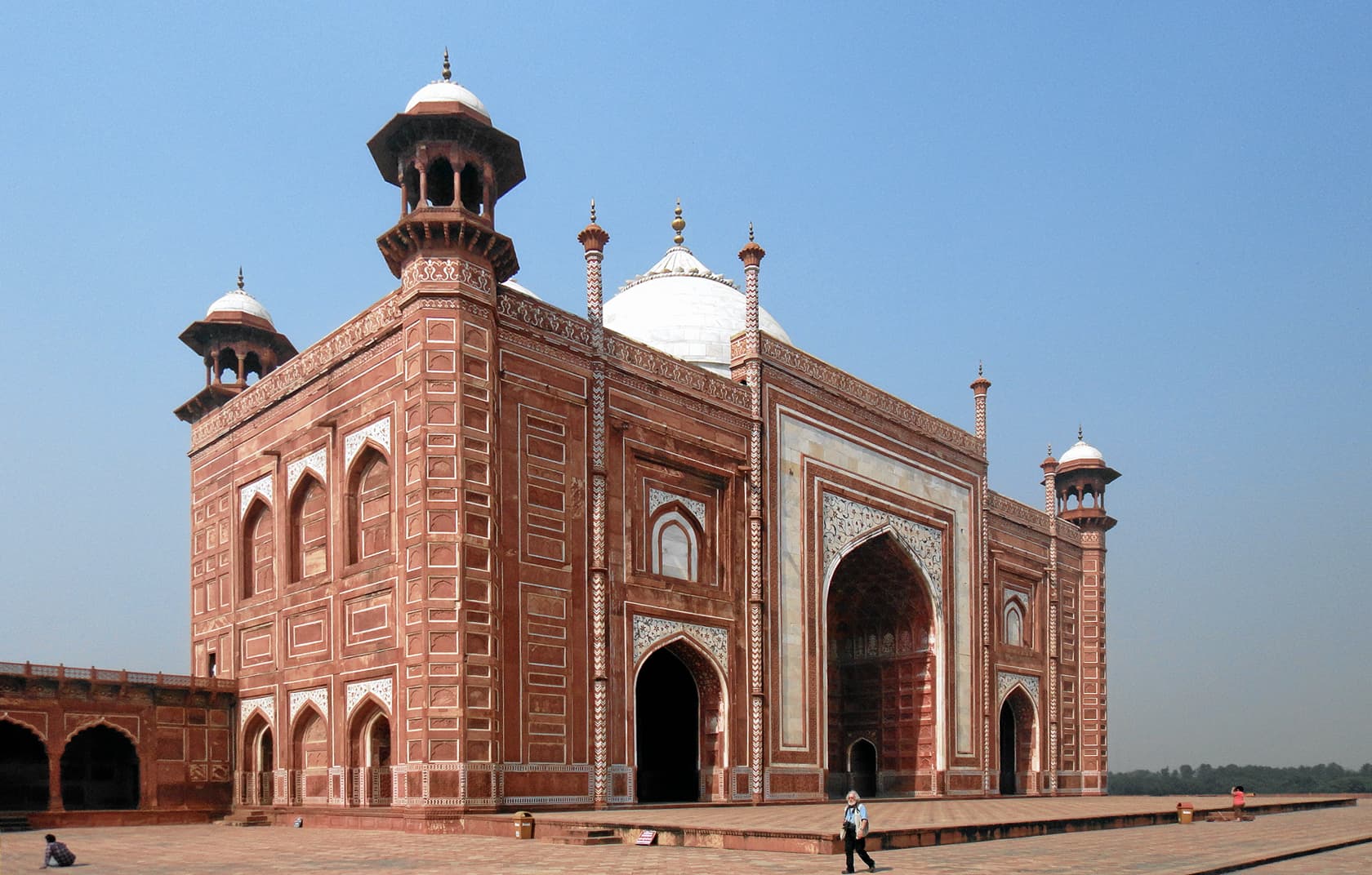 Mahmoudalrawi derivative work: MagentaGr / CC BY-SA 4.0 via Wikimedia Commons
Overview
The Delhi to Agra to Jaipur loop, extended into Rajasthan proper, is India’s most-traveled circuit and the classic first-timer route. In one drivable arc it stacks the Mughal imperial capital, the marble peak of the Taj Mahal, and the Rajput princely culture of the Pink City and beyond, three of the country’s most World Heritage dense regions.
This route rewards slowing down more than people plan for. The instinct is to do Delhi, Agra and Jaipur in five rushed days, but the payoff is in unhurried mornings and evenings: Amber Fort at opening before the buses, a Nahargarh sunset over the glowing Pink City, a thali eaten by hand in a haveli. Add three or four days for Udaipur or Jodhpur if you possibly can.
Best for
First-time India visitors · Culture and architecture travelers · Honeymooners · Photographers · Palace-hotel lovers
Daily itinerary
5 to 7 days for the core triangle; 10 to 14 days to reach Udaipur, Jodhpur or Pushkar.
Compared with South India’s temple trail or Kerala’s backwaters, the Golden Triangle is monument-dense and the most logistically solved route in the country: the best roads, the most frequent trains, the widest hotel range at every price, and English widely spoken.
Best time to visit
October to March is the window: comfortable days, little rain and the fullest festival calendar. April to June is brutally hot across Rajasthan and Agra; July to September is humid monsoon.
- October to February: The best combination of weather and festivals, including Diwali and the Pushkar Fair.
- March: Holi and warming fast; still good early in the month.
- April to June: Extreme heat, often above 40C in Rajasthan and Agra; avoid heavy sightseeing.
- July to September: Monsoon: humid with heavy rain; cheaper and greener but check road conditions.
Things worth knowing
- Pushkar Camel Fair, one of the world’s largest livestock fairs, held annually around Kartik Purnima in November.
- Holi (spring) is celebrated across the region with color and public festivity.
Where to stay
Delhi (Old and New Delhi)
The entry point: chaotic Mughal-era Old Delhi with the Red Fort and Jama Masjid, alongside the wide boulevards of colonial New Delhi. A layered first day or two before the road trip proper.
Best for: History and architecture · Street food · Arrival and acclimatization
Winter smog can be severe from October to February; Old Delhi traffic and crowds are intense and touts cluster near major sites.
Agra
The single-purpose base for the Taj Mahal, Agra Fort and Fatehpur Sikri; otherwise a fairly gritty mid-size city. Worth an overnight so you can be at the Taj for sunrise.
Best for: The Taj Mahal · Mughal architecture · One dedicated day
Aggressive touts near the Taj; little to do beyond the monuments; go early to beat heat and crowds.
Jaipur (the Pink City)
Rajasthan’s capital, its walled old city painted terracotta pink and UNESCO-listed as a planned city. Amber Fort, the City Palace, Hawa Mahal and Jantar Mantar are all here or nearby.
Best for: Architecture · Shopping · Palace hotels
Traffic congestion in the walled city; gem and shopping scams targeting tourists are a known issue.
Udaipur (City of Lakes)
Lake Pichola, the Lake Palace and the sprawling City Palace make Udaipur Rajasthan’s most romantic city, and a slower-paced second Rajasthan stop.
Best for: Honeymooners · Lake views · Heritage hotels
Further from the core triangle; best reached by a short flight or train from Jaipur rather than a single long drive.
Pushkar
A small sacred lake town in Ajmer district with a rare Brahma temple, backpacker-friendly and famous for its November camel fair.
Best for: Pilgrimage sites · Budget travelers · The camel fair
Alcohol and meat are officially banned given the town’s sacred status; watch for unofficial priest scams at the lake ghats.
Where to sleep
Taj Lake Palace, Udaipur
luxury · Lake Pichola, Udaipur
Best for: Honeymooners · A splurge · Lake views
- A genuine 18th-century royal palace on its own island in Lake Pichola
- Boat-only arrival is a real event
- Iconic lake views from every room
- Reachable only by hotel boat, awkward for late or luggage-heavy arrivals
- Extremely expensive
- Heritage-scaled rooms are not modern-hotel large
Rambagh Palace, Jaipur
luxury · Central Jaipur
Best for: Couples · History lovers · Grand dining
- A former Maharaja’s residence and one of India’s first palace hotels
- Opulent grounds, gardens and the Suvarna Mahal restaurant
- A strong sense of place
- Only around 78 rooms, so it books out in peak season
- A short drive from the walled old city rather than walking distance
- Premium pricing throughout, even for non-guests
ITC Mughal, a Luxury Collection Resort & Spa
resort · Fatehabad Road, Agra
Best for: Couples · Spa · An easier-to-book Agra base
- Large Mughal-garden-style grounds that won the Aga Khan Award for Architecture
- Strong spa and dining
- Plenty of rooms, so easier to book than the heritage palaces
- A modern building in Mughal style, not an original historic property
- A short drive from the Taj rather than walkable
- Large-resort scale can feel less intimate
Alsisar Haveli, Jaipur
boutique · Old City, Jaipur
Best for: Couples · Heritage character on a budget · Central Jaipur
- A genuine 1892 family mansion converted to a hotel
- Real heritage character at a fraction of palace-hotel prices
- Central, closer to old-city walking sights
- Much smaller and simpler than the palace tier
- The old building means variable room sizes and soundproofing
- Service is less polished than international luxury chains
Zostel Jaipur
value · MI Road, Jaipur
Best for: Backpackers · Solo travelers · A social, central base
- A well-reviewed backpacker brand with dorm and private options
- Social common areas and a rooftop cafe
- Central, walkable to old-city sights
- Hostel format is not suited to families or those wanting quiet
- Limited services compared with a hotel
- Can be noisy given the social focus
Essential experiences
Taj Mahal (UNESCO)
The white marble mausoleum built by Emperor Shah Jahan for Mumtaz Mahal between 1631 and 1648, a UNESCO World Heritage site since 1983.
Agra Fort (UNESCO)
The 16th-century red sandstone Mughal fortress with palaces, audience halls and mosques inside a long enclosure wall; UNESCO-listed since 1983.
Amber Fort (Amer), Jaipur
A hilltop Rajput fort-palace begun in 1592, famed for its mirrored Sheesh Mahal; part of the Hill Forts of Rajasthan heritage.
Hawa Mahal, Jaipur
The five-story Palace of Winds, built in 1799 with hundreds of latticed windows so royal women could watch the street unseen.
City Palace, Jaipur
The royal palace complex built from 1729 under the city’s founder, still partly home to Jaipur’s royal family and open as a museum.
Jantar Mantar, Jaipur (UNESCO)
An early-18th-century observatory of about twenty monumental masonry astronomical instruments, the best preserved of India’s historic observatories.
Qutb Minar, Delhi (UNESCO)
The early-13th-century red sandstone tower, over 70m tall, at the heart of a complex with the oldest mosque in northern India.
Fatehpur Sikri (UNESCO)
Emperor Akbar’s late-16th-century capital, abandoned after about a decade, including one of India’s largest mosques.
Food & drink
- Dal baati churma: Rajasthan’s signature dish: baked wheat balls in ghee with a spiced lentil dal and a sweet crushed-baati churma.
- Laal maas: A fiery Rajput mutton curry cooked with yogurt, garlic and dried Mathania red chillies; a royal hunting-camp dish.
- Ghewar: A disc-shaped, honeycomb-textured fried sweet soaked in syrup, made for festivals like Teej and Raksha Bandhan.
- Kachori: A deep-fried, spiced lentil- or onion-stuffed pastry, a staple Rajasthani breakfast and street snack.
- Rajasthani thali: A full sampler plate of dal baati churma, gatte ki sabzi, ker sangri, papad, pickles and sweets in one meal.
A thali is the best way to try the cuisine’s breadth in one sitting; street food is a highlight but stick to busy, freshly cooked stalls.
Where to eat
Suvarna Mahal
fine-diningRoyal-court cooking from Rajasthan, Awadh, Punjab and Hyderabad in a gilded dining room. Book ahead.
Last researched 2026-07-15
Chokhi Dhani
institutionA recreated Rajasthani village resort serving thalis alongside folk music, dance and crafts.
Last researched 2026-07-15
Old Delhi street food (Chandni Chowk)
street-foodThe lanes around Chandni Chowk are the classic street-food crawl; choose busy, freshly cooked stalls.
Last researched 2026-07-15
Sunrises
Taj Mahal at sunrise
The marble shifts color in early light and the crowds are far thinner than midday; the site opens near dawn for exactly this.
October to March · The site is closed on Fridays for prayers; plan your Agra night around that.
Fatehpur Sikri early morning
The abandoned Mughal capital is cooler, quieter and better lit for the sandstone before the tour buses arrive from Agra.
October to March
Sunsets
Nahargarh Fort, Jaipur
Jaipur’s definitive sunset viewpoint over the Aravalli hills, with the Pink City glowing below from the ramparts.
Year-round · A drive up the hill; combine with an early-evening view rather than a late descent in the dark.
Mehrangarh Fort, Jodhpur
Sunset over the Blue City from one of India’s great forts, with rooftop restaurants nearby offering direct fort views.
October to March · The fort closes in the early evening; time a late-afternoon visit and a rooftop dinner after.
Bada Bagh cenotaphs, Jaisalmer
Royal cenotaphs that glow gold in the desert sunset, a short drive from Jaisalmer for those who reach the far west.
October to March
Day trips
Fatehpur Sikri from Agra
Emperor Akbar’s abandoned 16th-century capital, a UNESCO site about 40km from Agra, often paired with the Agra to Jaipur drive.
About 1 hour each way from Agra · Half day
Chand Baori stepwell, Abhaneri
One of the world’s largest and oldest stepwells, a 9th-century geometric marvel of thousands of steps, about 88km from Jaipur.
About 1.5 hours each way from Jaipur · Half day
Ranthambore tiger safari
One of India’s premier tiger reserves, open October to June, reachable by road or rail from Jaipur.
About 3.5 hours each way from Jaipur · Full day or overnight
Daily itinerary
Five days on the Golden Triangle: Delhi, Agra and Jaipur
A day in Delhi, the fast train to Agra, then a car with driver on to Jaipur. Slow the mornings down.
- 1
Delhi
moderateArrive and settle; Humayun’s Tomb or the Qutb Minar complex.A New Delhi restaurant.Old Delhi: Jama Masjid and a walk through the bazaars.India Gate and the government quarter.Old Delhi street food around Chandni Chowk.An early night before the train.No car needed; use taxis or the metro in Delhi.Estimate: Swap Old Delhi for the Red Fort if you prefer a single big monument.
- 2
Train to Agra
moderateTake the fast Gatimaan Express to Agra.In Agra near the fort.Agra Fort and the riverside view of the Taj.Mehtab Bagh across the river for a Taj view.At or near your Agra hotel.Early night for a sunrise start.Train from Delhi; a driver meets you in Agra.Estimate: Drive instead of the train if you want to stop en route.
- 3
Taj sunrise and on to Jaipur
fullThe Taj Mahal at opening, then breakfast.Fatehpur Sikri en route.Drive on toward Jaipur.Arrival in Jaipur.A first Jaipur dinner.Rest after the drive.Car with driver Agra to Jaipur, roughly five hours with the Fatehpur Sikri stop.Estimate: Skip Fatehpur Sikri for a longer, slower morning at the Taj.
- 4
Jaipur
fullAmber Fort at opening before the crowds.Near the City Palace.City Palace, Jantar Mantar and Hawa Mahal.Nahargarh Fort over the Pink City.A thali at Chokhi Dhani or an old-city restaurant.Old-city walk.Car and driver for Amber Fort; the old city is walkable.Estimate: Add a bazaar shopping afternoon if forts are enough.
- 5
Jaipur to Delhi and departure
moderateA last Jaipur sight or the bazaars.On the road back to Delhi.Drive to Delhi for your flight.Departure.Car and driver Jaipur to Delhi, about five hours; leave a big buffer.Estimate: If you have more days, fly or train to Udaipur or Jodhpur instead of returning to Delhi.
Getting around
- Most international travelers arrive at Indira Gandhi International Airport in Delhi (DEL), the standard start of the loop.
- The Gatimaan Express covers Delhi to Agra in about 1h40m and is the best way to skip the highway for that leg.
- Hiring a car with a private driver is the standard and recommended way to do the loop; self-driving is not advised for visitors.
- Trains connect Delhi, Agra and Jaipur; book on the official IRCTC platform.
- Auto-rickshaws and app rides cover the cities; agree fares or use the meter.
Things worth knowing
- · Trying to self-drive rather than hiring a car with a driver.
- · Packing the triangle into five rushed days with no slow mornings.
- · Booking the Taj on a Friday, when it is closed for prayers.
Budget
| Low | Expected | Comfortable | |
|---|---|---|---|
| Accommodation style / per night | ₹1,500 | ₹6,000 | ₹25,000 |
| Food style / per day | ₹600 | ₹2,000 | ₹5,000 |
| Local transport / per day | ₹800 | ₹3,000 | ₹6,000 |
| Estimate / per day | ₹1,000 | ₹2,000 | ₹3,500 |
Estimate · INR · 2026-07-15. Accommodation is per room per night (two sharing). Local transport reflects a hired car with driver for sightseeing days. Foreign-visitor monument fees are higher than domestic; palace hotels run far above the comfortable band.
Things worth knowing
Frequently asked questions
How many days do you need for the Golden Triangle?
Five to seven days covers Delhi, Agra and Jaipur without rushing. Add three or four more to reach Udaipur, Jodhpur or Pushkar, which is where much of Rajasthan’s character lives.
Should you self-drive the Golden Triangle?
No. Hiring a car with a private driver is the standard, affordable and far safer choice given local traffic; take the fast train for the Delhi to Agra leg.
When is the best time to visit Rajasthan and the Golden Triangle?
October to March, when days are comfortable and rain is minimal. April to June is extremely hot and July to September is monsoon.
What is the best way to see the Taj Mahal?
Go at sunrise, when the marble catches the early light and crowds are thin. Buy tickets on the official platform, and remember it is closed on Fridays.
Is the Golden Triangle good for first-time visitors to India?
Yes. It is the most logistically solved route in the country, with the best roads, frequent trains, hotels at every price and English widely spoken.
Sources (3)
- Taj Mahal is a UNESCO World Heritage site · unesco · 2026-07-15
- Rajasthan destinations and practical information · tourism-board · 2026-07-15
- Incredible India national tourism information · tourism-board · 2026-07-15