Portugal · Lisbon
Lisbon
Stay in Chiado or Principe Real for a central, walkable base, spend a morning in Alfama and an afternoon in Belem, chase sunset at a miradouro, and give a full day to Sintra.
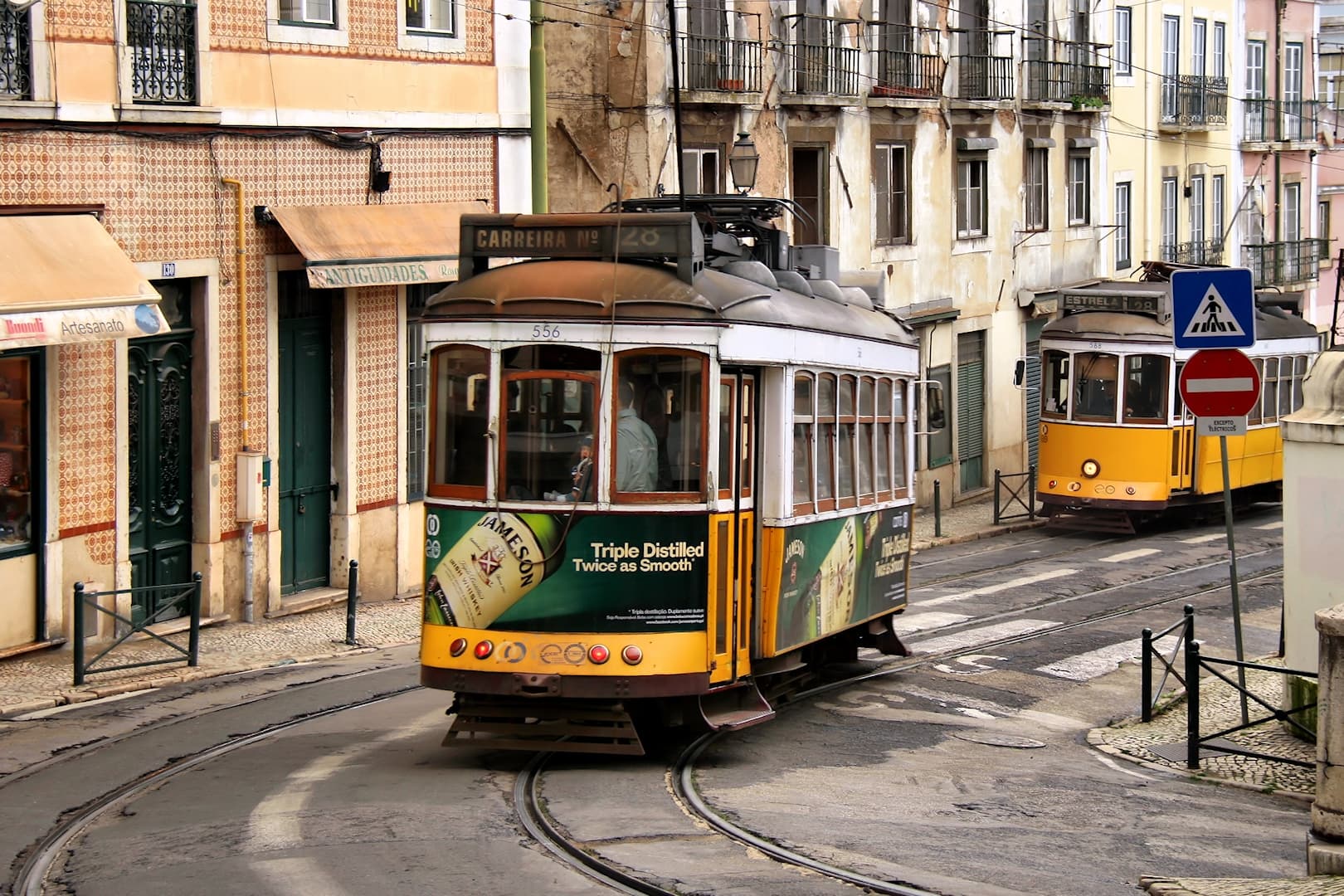 Jorge Franganillo from Barcelona, Spain / CC BY 2.0 via Wikimedia Commons
Overview
Lisbon is built on seven hills above the wide mouth of the Tagus, and almost every neighborhood delivers a view of the river as a reward for the climb. It pairs a UNESCO-listed Age-of-Discoveries monument district in Belem with a lived-in old town in Alfama, a design-forward center in Chiado and Principe Real, and some of Europe’s best-value food and wine.
If you only take one thing from this guide: do not try to see Belem and the old town on the same day. Belem’s monuments deserve unhurried time and sit 20 to 30 minutes from the center; pair it with the riverside instead and save your hill-climbing energy for Alfama and the miradouros.
Best for
First-time Europe visitors · Food and wine lovers · Couples · Digital nomads · Budget-conscious travelers
Daily itinerary
4 to 6 days, plus a day for Sintra
Unlike flatter capitals, Lisbon rewards walking uphill: tiled facades, yellow trams climbing impossible gradients, and a miradouro (viewpoint) at the top of nearly every hill. It is also one of the few Western European capitals where a genuinely good dinner with wine still runs under 40 euros.
Best time to visit
March to May and September to October are the sweet spots: mild, sunny days, warm enough for outdoor dining, and none of the July-August heat that regularly pushes past 35 degrees Celsius inland.
- March to May: Spring light, jacaranda trees blooming in late spring, comfortable walking weather.
- June: Santo Antonio festival (June 12-13) fills Alfama with street parties; book well ahead.
- July to August: Peak heat and crowds; the coast (Cascais, Costa da Caparica) gets very busy on weekends.
- September to October: Warm sea, softening crowds, arguably the best month-pair of the year.
- November to February: Mild but wetter; fewer tourists, lower hotel prices.
Things worth knowing
- Festas de Lisboa / Santo Antonio (June): the year’s biggest street festival, centered on Alfama and Graca.
- Indie Lisboa film festival (spring) and various fado and jazz series through the year.
Where to stay
Alfama
Lisbon’s oldest quarter: a maze of steep, narrow lanes below the castle, tiled facades, fado bars, and the city’s best sunrise and sunset viewpoints. Atmospheric but a genuine workout on foot.
Best for: First-time visitors · Fado · Views · Photography
Very steep and cobbled; hard on knees and wheeled luggage. Tram 28 gets packed with tourists.
Chiado and Baixa
The flat, central core: grand 18th-century squares rebuilt after the 1755 earthquake, elegant shopping streets, cafes and theaters. The easiest base for a first visit.
Best for: First-time visitors · Shopping · Central location · No car
Touristy and can feel generic on the main squares; side streets are better for food.
Principe Real and Bairro Alto
Principe Real is upscale and design-led with a leafy square and boutique shops; Bairro Alto below it is quiet by day and Lisbon’s nightlife district after dark, with bars spilling into the streets.
Best for: Nightlife · Design shopping · Food
Bairro Alto is loud until the early hours on weekends; light sleepers should stay a few streets away.
Belem
The riverside monument district: the Jeronimos Monastery and Belem Tower, both UNESCO-listed, plus the Discoveries Monument and the original Pasteis de Belem bakery. Better as a half-day trip than a base.
Best for: History · Architecture · Museums
20 to 30 minutes from the center by tram or bus; queues for the monastery and tower build fast after 10am.
Graca and the eastern hills
Quieter and more residential than Alfama, with the city’s highest miradouro (Senhora do Monte) and a strong local, less touristy feel.
Best for: Sunset views · Local atmosphere · Value
Fewer restaurants and services than the center; steep walk up from Alfama.
Where to sleep
Four Seasons Hotel Ritz Lisbon
luxury · Marques de Pombal / Eduardo VII Park
Best for: Couples · Classic luxury · Art lovers
- Ten storeys above Eduardo VII Park with sweeping city views
- Private collection of mid-20th-century Portuguese art
- Michelin-starred restaurant on site
- A 15 to 20 minute walk or taxi from Alfama and the old town
- Formal, business-hotel feel rather than boutique character
- Among the most expensive rooms in the city
Bairro Alto Hotel
luxury · Bairro Alto / Chiado
Best for: Couples · Rooftop views · Central nightlife access
- Rooftop terrace with a panoramic river and old-town view
- Prime square-side location in the heart of Chiado
- A Leading Hotels of the World member with consistent service
- Street and nightlife noise on lower floors in Bairro Alto
- Small footprint means rooms book out early
- Expensive relative to size
AlmaLusa Baixa/Chiado
boutique · Baixa / Chiado
Best for: Couples · Central walkable base · Design
- Sits right on Praca do Municipio, minutes from the river and Alfama
- Only 28 rooms, so service stays personal
- Contemporary design inside a historic building
- No pool or spa
- Some rooms are compact
- No on-site parking in a car-hostile neighborhood
Memmo Alfama
boutique · Alfama
Best for: Couples · Views over the Tagus · Staying inside Alfama
- Small rooftop pool with one of the best river views in the city
- Genuinely inside the old quarter, not just near it
- Quiet despite the busy neighborhood around it
- Steep, cobbled approach makes luggage difficult
- No real restaurant on site beyond breakfast and bar
- Some rooms are small, in keeping with the historic building
Santiago de Alfama
boutique · Alfama
Best for: Couples · Historic character · A 10-minute walk to the castle
- A restored historic mansion with panoramic city views
- Distinctive, individually decorated rooms
- Ten-minute walk to Sao Jorge Castle
- No elevator in parts of the historic building
- Breakfast room is small for busier mornings
- Same steep-lane access issues as the rest of Alfama
Essential experiences
Jeronimos Monastery (UNESCO)
The Manueline-style monastery begun in 1502 to honor Vasco da Gama’s voyages; inscribed jointly with Belem Tower on the UNESCO World Heritage List in 1983.
Belem Tower (UNESCO)
The fortified Manueline tower built around 1514 to defend the Tagus and commemorate Vasco da Gama’s expedition; inscribed with the monastery on the same 1983 UNESCO listing.
Sao Jorge Castle
The hilltop Moorish-era castle overlooking Alfama and the Tagus; the walk up is steep but the ramparts give the best 360-degree view of the city.
Tram 28
The vintage yellow tram climbing from Martim Moniz through Alfama, the Se Cathedral, Baixa and Chiado to Estrela and Campo de Ourique; a cheap, if crowded, way to see the hills.
Praca do Comercio
The grand riverside square rebuilt after the 1755 earthquake, framed by yellow arcades and opening straight onto the Tagus.
National Azulejo Museum
A former convent tracing the history of Portugal’s decorative tin-glazed tiles, with a rooftop cafe view over the eastern Tagus waterfront.
LX Factory
A former industrial complex under the 25 de Abril Bridge, now workshops, bookshops, restaurants and murals; a popular weekend brunch spot.
Food & drink
- Pastel de nata: The custard tart Lisbon is famous for; the original recipe comes from the Jeronimos monks, sold today at Pasteis de Belem.
- Bacalhau a Bras: Shredded salt cod scrambled with eggs, onions and thin fried potatoes; one of hundreds of Portuguese salt-cod preparations.
- Bifana: A thin, garlicky pork cutlet sandwich in a soft roll; the classic quick lunch or late-night snack.
- Ginjinha: Sour-cherry liqueur served from hole-in-the-wall bars around Rossio, often in a chocolate cup.
- Grilled fresh seafood: Prawns, clams and whole fish grilled simply; Cervejaria Ramiro is the best-known seafood institution in the city.
Lunch runs 12:30 to 3pm and dinner from 7:30pm; many traditional tascas close on Sundays or Mondays.
Where to eat
Pasteis de Belem
bakeryBaking to the same secret recipe since 1837; expect a queue but a fast-moving one for takeaway.
Last researched 2026-07-15
Time Out Market Lisboa
marketA curated food hall of Lisbon chefs and stalls inside the historic Mercado da Ribeira; busy at peak meal times.
Last researched 2026-07-15
Cervejaria Ramiro
institutionA no-frills but famous shellfish hall since 1956; expect a wait and a deposit required for larger bookings.
Last researched 2026-07-15
Sunrises
Miradouro das Portas do Sol
Facing east over Alfama’s rooftops and the Tagus, this terrace catches the sunrise with far fewer crowds than at sunset.
Year-round
Sunsets
Miradouro de Santa Luzia
A small tiled terrace draped in bougainvillea, looking over Alfama’s rooftops to the river; the postcard view of Lisbon.
Year-round · The azulejo panels and pergola frame the shot; best light about an hour before sunset.
Miradouro da Senhora do Monte
The highest viewpoint in the city, above Graca, with an unobstructed sweep from the castle to the 25 de Abril Bridge.
Year-round · A genuine uphill walk from Alfama or a short tram/tuk-tuk ride.
Cristo Rei viewpoint, across the river
The hilltop monument across the Tagus in Almada gives the classic reverse view: Lisbon’s skyline and the bridge lit by the setting sun.
Year-round · Reached by ferry from Cais do Sodre plus a short bus or taxi ride.
Day trips
Sintra (UNESCO Cultural Landscape)
A cluster of Romantic-era palaces in forested hills 30 minutes from Lisbon: the colorful Pena Palace, the Moorish Castle, and the Gothic-mystic Quinta da Regaleira.
About 40 minutes by train from Rossio station · Full day
Cascais and Cabo da Roca
A relaxed seaside resort town with a marina and sandy beaches, plus continental Europe’s westernmost point at Cabo da Roca on the way there or back.
About 40 minutes by train from Cais do Sodre · Half to full day
Belem monuments (half-day from the center)
Not a full day trip but far enough to plan as its own outing: Jeronimos Monastery, Belem Tower, the Discoveries Monument and the original pastel de nata bakery.
About 20 to 30 minutes by tram 15E or bus from the center · Half day
Daily itinerary
Five days in Lisbon: hills, river and a day in Sintra
A central base in Chiado or Principe Real, no car needed, one full day reserved for Sintra.
- 1
Baixa and Chiado
relaxedArrive, settle in, walk Praca do Comercio and the Baixa grid.A tasca in Chiado.Elevador de Santa Justa and the Chiado shopping streets.Miradouro de Sao Pedro de Alcantara.Dinner in Bairro Alto.A first taste of Bairro Alto’s bar streets.Entirely walkable; no car needed.Estimate: Swap the elevator for the Carmo Convent ruins if it is busy.
- 2
Alfama and the castle
moderateSao Jorge Castle for the ramparts view.Lunch near the Se Cathedral.Wander down through Alfama’s lanes to the Fado Museum.Miradouro de Santa Luzia.A fado house dinner in Alfama.Fado performance.Walkable but steep; take Tram 28 partway if tired.Estimate: Ride Tram 28 end to end instead of walking if the heat is intense.
- 3
Belem
moderateJeronimos Monastery, arriving at opening to beat the queue.Pasteis de Belem for a late-morning tart, then a riverside lunch.Belem Tower and the Discoveries Monument.Walk back along the riverside promenade toward Alcantara.Dinner in LX Factory or back in the center.Quiet night before Sintra.Tram 15E out to Belem; taxi or bus back if tired.Estimate: Add the Berardo modern art collection if the queues at the monastery are long.
- 4
Sintra
fullEarly train to Sintra; head straight for Pena Palace before the tour buses arrive.Lunch in Sintra village.Quinta da Regaleira or the Moorish Castle, depending on energy.Back in Lisbon in time for a Graca miradouro.Dinner in Graca or Alfama.Rest after a full day of hills.Train from Rossio; tuk-tuks or the local 434 bus link Sintra’s sights.Estimate: Book Pena Palace and Regaleira tickets online in advance in peak season.
- 5
Principe Real and departure
relaxedA slow morning around Principe Real’s garden and design shops.A final tasca lunch near your hotel.Last-minute shopping or the National Azulejo Museum if time allows.Departure.Leave buffer time for airport transfer; Lisbon airport is inside the city.Estimate: Swap the museum for a Cascais half-day if flying out late.
Getting around
- Humberto Delgado Airport (LIS) is inside the city, about 20 minutes by taxi or metro (red line) from the center.
- Long-distance trains and buses arrive at Oriente and Santa Apolonia stations; ferries cross the Tagus from Cais do Sodre and Terreiro do Paco.
- The metro (four lines) covers the newer parts of the city well; the old hilltop neighborhoods are better served by trams and funiculars.
- A Viva Viagem or Navegante card covers metro, bus, tram and ferry travel and is cheaper than single tickets.
- Tuk-tuks are common for short hops up steep hills but are pricier than public transport.
Things worth knowing
- · Trying to combine Belem and Alfama in one day; they are on opposite ends of the city.
- · Not booking Sintra’s Pena Palace or Regaleira tickets ahead in peak season.
- · Underestimating how physically demanding the hills are with luggage or in summer heat.
Budget
| Low | Expected | Comfortable | |
|---|---|---|---|
| Accommodation style / per night | €60 | €130 | €280 |
| Food style / per day | €20 | €40 | €80 |
| Local transport / per day | €6 | €12 | €30 |
| Estimate / per day | €5 | €15 | €30 |
Estimate · EUR · 2026-07-15. Accommodation is per room per night (two sharing). Shoulder-season figures; July/August and Santo Antonio week run higher.
Things worth knowing
Frequently asked questions
How many days do you need in Lisbon?
Four to six days covers the city well, plus a full extra day for Sintra. Four is enough for the highlights; six lets you add Cascais or a slower pace.
What is the best area to stay in Lisbon for the first time?
Chiado or Baixa for a flat, central, walkable base close to both Alfama and the riverside. Principe Real is a quieter, design-led alternative nearby.
When is the best time to visit Lisbon?
April, May, September and October: mild temperatures, good light and lighter crowds than the June-to-August peak.
Do you need a car in Lisbon?
No. The center is walkable and hilly streets make driving and parking impractical; trains handle Sintra and Cascais easily.
Is Sintra doable as a half day?
Not comfortably. Sintra’s palaces are spread across forested hills with queues and transfer time between them; a full day lets you see two or three properly.
Sources (4)
- Monastery of the Hieronymites and Tower of Belem inscribed on the UNESCO World Heritage List in 1983 · unesco · 2026-07-15
- Cultural Landscape of Sintra inscribed on the UNESCO World Heritage List · unesco · 2026-07-15
- Lisbon overview, neighborhoods and attractions · tourism-board · 2026-07-15
- Pasteis de Belem baking since 1837 to the original recipe · official · 2026-07-15